
It can also be the sound of money leaving your bank account. A veteran mechanic says the fix often costs about £5 — and ignoring it can snowball into a £2,000 engine disaster.
I’m standing in a small garage on a wet Tuesday in Leeds. A grey hatchback grumbles on the ramp, its owner chewing a thumbnail while the mechanic listens, head tilted. The noise is faint, tinny, like a teaspoon in a cup. He blips the throttle, then kills the engine and reaches for a torch.
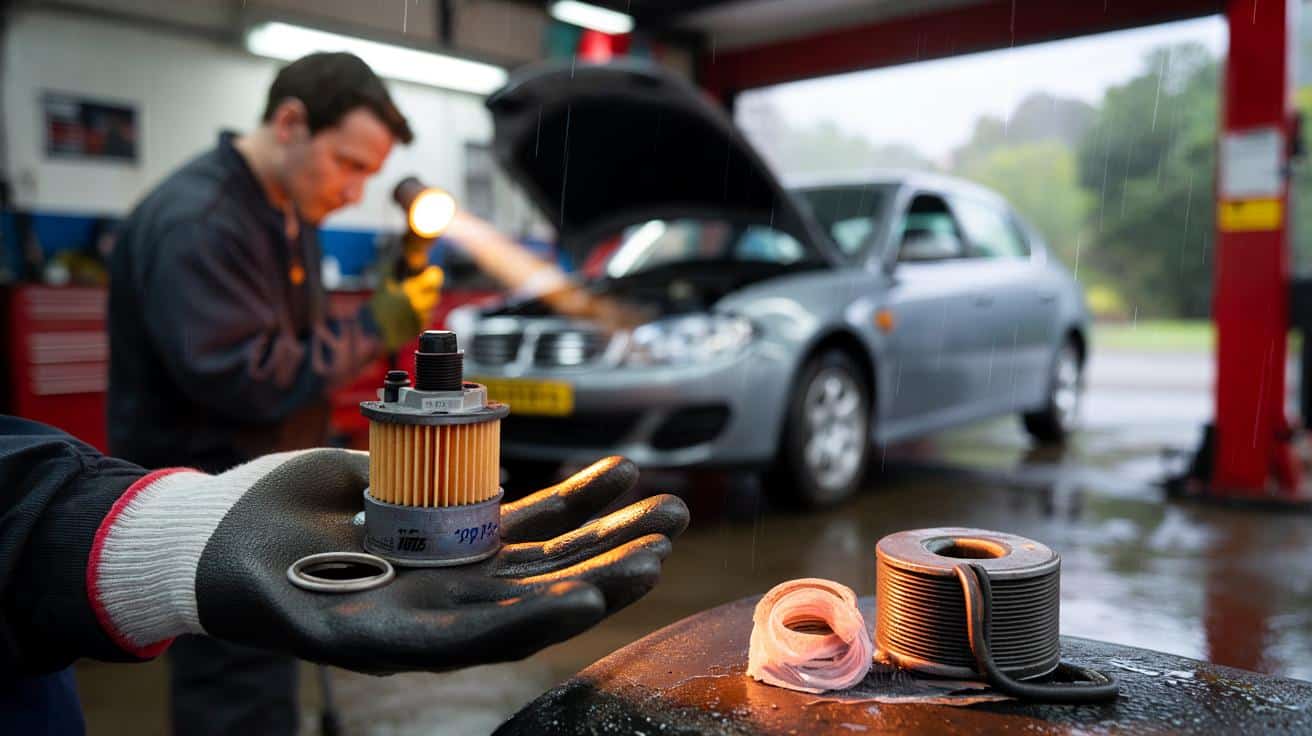
He doesn’t look worried. He’s seen this movie. He wiggles a heat shield and taps an oil filter with a spanner. “Two likely culprits,” he says, smiling in that calm way people do when they know the ending. He holds up a rubber washer and a branded oil filter, each roughly a fiver. “Pick the right £5 today,” he adds, “and you won’t spend two grand tomorrow.”
One rattle. Two possible paths.
The rattle that writes off engines
A metallic chatter on cold start is often your timing chain asking for mercy. Not because the chain is bad, but because oil isn’t reaching the tensioner quickly. Cheap filters without an anti-drainback valve let oil drain away overnight, so every morning starts “dry.” That’s when the chain slaps, guides wear, and the noise you can just about ignore becomes the drumbeat of future bills.
Another villain is humbler still: a loose exhaust or turbo heat shield. It buzzes at certain revs, then quietens. People wave it away, turn up the radio. But a flapping shield can chafe a coolant hose or wiring loom. One nicked hose, one unnoticed leak, one motorway run later — and an overheated, seized engine that makes adults sigh into tea.
We’ve all had that moment when the car sounds different and we hope it goes away. That’s how the road to £2,000 starts: a hundred short trips on a dry-starting chain, or a month with a buzzing shield rubbing rubber. The maths is brutal. A proper filter with a good anti-drainback valve? About £5–£10. New heat shield washers or fixings? Also about a fiver. A timing chain and guide set, or a cooked head gasket and skim? Four figures, easy.
Real cars, real bills, avoidable pain
Take Lucy in Bristol. Her Fiesta had a brief rattle at first start, then settled. For six months she ignored it. One frosty morning, the chain jumped a tooth on the way to work. Bent valves, smashed guides, tow truck. Her garage showed her the budget filter that had been fitted a service ago — no proper anti-drainback valve, oil draining back each night. The bill came in at £2,050. The part that might have prevented it? £6.79.
Or Dan’s Octavia with the mystery buzz around 1,800 rpm. He thought it was “just an old car sound.” On the M5 a month later a temperature light flashed, then a plume of steam. A heat shield corner had been vibrating and buzzing against the top radiator hose. It finally cut through. Recovery, new hose, warped head, machine work. The repair cost could have bought him a weekend in Lisbon.
These aren’t unicorn cases. Every independent I speak to has half a dozen stories just like them. Not all rattles are harbingers of doom, but the risky ones rhyme: short, tinny, metallic, tied to revs, or loudest at first start. Fixes rarely need a shopping trolley. They need the right tiny part, now, rather than a remortgage later.
How the £5 fix actually saves an engine
Here’s the simple chain of cause and effect. The timing chain tensioner relies on oil pressure. A filter with a good anti-drainback valve holds oil in the galleries and in the filter overnight, so pressure builds fast at start-up. The chain stays tight. No slap, no grind, no early wear. A budget filter without that valve lets oil drain back into the sump. Dry start, rattle, repeated micro-impacts — and your chain ages a year every cold morning.
Heat shields and exhaust hangers live hard lives. Thin metal, hot-cold cycles, salt and spray. When their fixings fatigue, the panel vibrates and cuts a groove into the nearest soft thing. Often that’s a coolant hose or wiring. The £5 answer is boring: new penny washers, nylon spacers, a fresh rubber hanger. What looks like DIY tinkering is actually lifesaving admin for your engine bay.
Small spends reduce worst-case outcomes. Think of it as an insurance policy you fit yourself. *The only thing cheaper than a £5 fix is catching the rattle before it begins.* That means paying attention to new noises, swapping out false economy filters, and gently tightening the bits that buzz. Quiet engines cost less.
Find the rattle in 10 minutes
Start from cold and listen. If there’s a brief metallic chatter for one or two seconds, suspect the oil filter’s anti-drainback valve. If there’s a buzz at certain revs, especially around 1,500–2,500 rpm, look at heat shields and exhaust hangers. With the engine off, tap shields with a wooden spoon and wiggle brackets. You’re hunting for play, not force-testing.
Use a torch. Look for soot stains around manifolds and shields, bright metal where things have rubbed, or a hose that’s polishing itself against thin tin. Replace missing washers with larger penny washers. Fit fresh rubber hangers if the exhaust droops. When in doubt, take a short video of the sound near the noise source and show a pro. Let’s be honest: nobody actually does that every day.
Don’t poke near belts or fans with the engine running. Don’t overtighten heat shield bolts — they snap, and then you’re drilling studs for fun. If you fit a new filter, buy one with a proven anti-drainback valve and the exact oil spec in your handbook. If your rattle persists beyond two seconds after start-up, stop experimenting and book in. “Spend a fiver on the right small part before the noise writes the invoice,” says Mark, an independent mechanic in Birmingham.
“Nine times out of ten, the car is asking nicely. The tenth time is when it gives up asking.”
- Swap to a quality oil filter with an anti-drainback valve (about £5–£10).
- Add or replace missing heat shield washers and spacers (around £5).
- Fit a new rubber exhaust hanger if the pipe moves too freely.
- Nudge a buzzing shield away from hoses using a small spacer.
- Top up oil to mid-dipstick with the correct grade if you’re low.
Why a tiny noise deserves your attention
A small rattle is your margin talking. Cars rarely jump from whisper to catastrophe in one leap. They leave breadcrumbs — a buzz here, a chatter there — and the cheapest time to act is right at the start. A £5 part doesn’t feel heroic. It feels ordinary. That’s the point. Ordinary action beats extraordinary bills.
Some readers will hear this and think, not my car. Maybe you’re right. Or maybe you’re one school run away from a hose wearing through, one frosty morning away from a dry start that lasts a second too long. The quietest engines belong to people who get curious before they get unlucky.
Think of the £5 fix as permission to care. Not fuss, not panic. Just that gentle, grown-up habit of tightening the small things that keep life running. Share this with the person you know who turns up the stereo when the car starts to sing. One conversation can save four figures.
| Key Point | Detail | Interest for the reader |
|---|---|---|
| Don’t ignore the rattle | Short metallic chatter at cold start or a buzz at certain revs signals risk | Identifies which noises deserve immediate attention |
| The £5 fix | Quality oil filter with anti-drainback; new heat shield washers/hangers | Low-cost parts that prevent high-cost failures |
| £2,000 engine failure | Timing chain wear or overheating from a chafed hose can escalate fast | Clear stakes that motivate action today |
FAQ :
- What rattles are most dangerous?A brief metallic chatter on cold start, and a buzz tied to specific revs from the exhaust/heat shield area. Both can escalate if ignored.
- Can I just remove a rattling heat shield?Don’t. It protects hoses, wiring and nearby components from heat. Refit with new washers or replace it.
- Is a £5 oil filter really enough?If it has a proper anti-drainback valve and meets spec, yes. Cheap filters without that valve cause dry starts that wear chains.
- How long can I drive with a rattle?If the noise lasts more than two seconds at cold start, or worsens under load, stop and get it checked. Small windows close quickly.
- What else should I check while I’m there?Oil level and grade, belt condition, loose brackets, and any hose or loom that’s rubbing on thin metal. One quick look saves long days.








Turning up the radio is not a fix—buy the proper filter 🙂