
” I’m a plumber, and I’m telling you the opposite. Your kitchen drain isn’t built for that kind of heat, and the mess it causes shows up weeks later, not minutes.
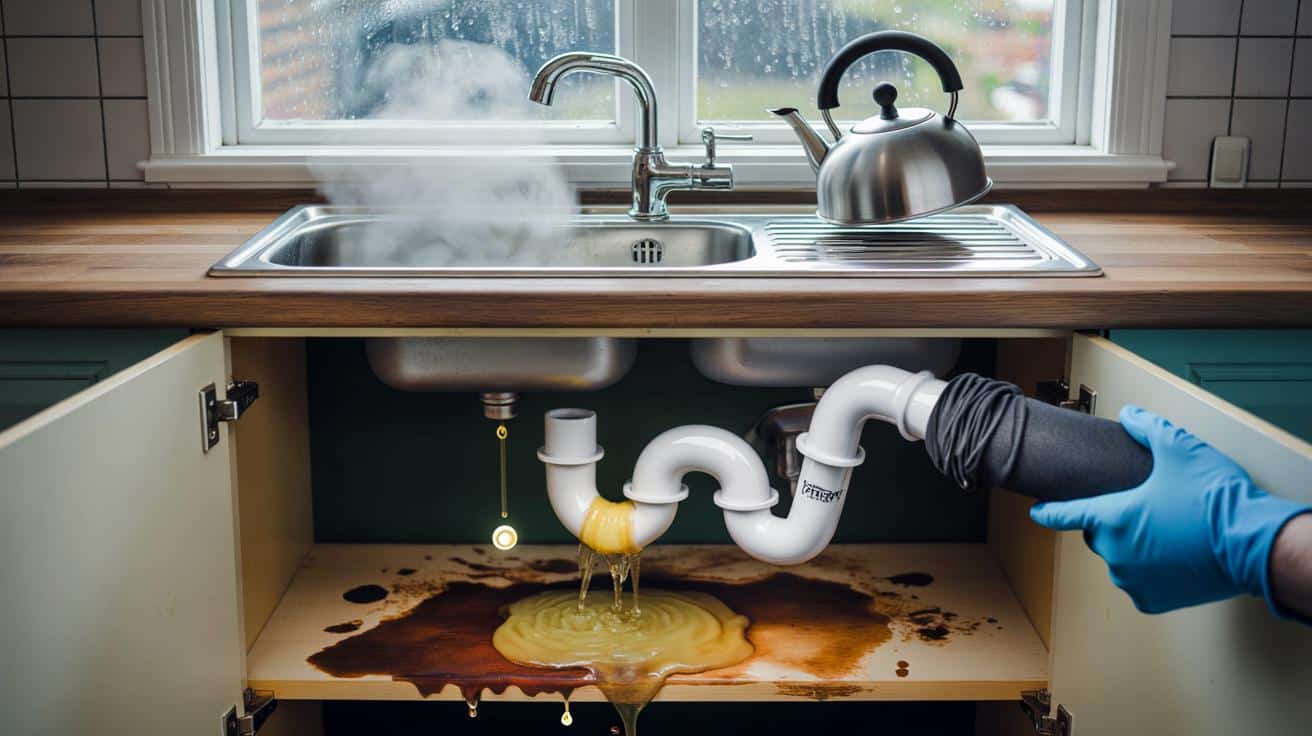
We were in a quiet semi at 8 a.m., coat still damp from the drizzle. The homeowner swore the kettle trick worked every Sunday after a heavy roast, until the cupboard under the sink started smelling like a chip van. I cracked the trap and a slick ribbon of warm fat slid out, followed by a slow drip that had been chewing the particleboard for months. The pipe was oval where it should’ve been round. The rubber washer looked like overcooked pasta. We’ve all had that moment when the sink gurgles and you reach for the kettle. Here’s where that moment goes wrong.
Boiling water meets everyday plumbing
Kitchen drains in most UK homes are plastic — PVC, ABS, push-fit with rubber seals, or compression traps with soft washers. They like warm water, not 100°C blasts straight from a kettle. Heat softens plastic and swells gaskets, and that sudden expansion makes joints slip and nuts loosen. Stainless sinks shrug off heat, but composites, porcelain coatings and sealants don’t. Your sink’s metal basket and the silicone around it? They can warp or degrade under repeated scalding. As I tell customers: pipes aren’t kettles.
Last winter in a terrace off the high street, a couple were pouring two kettles down the sink every weekend. No clogs on Monday, applause all round. Six weeks later, the horizontal waste was slumping by a centimetre and a hairline crack had formed at a push-fit elbow. The grease had been swept farther along, cooled, then stuck like wax where the pipe turns. The cupboard floor gave way with a thumbprint. That’s how grease migrates — it doesn’t vanish, it moves and hardens out of sight.
Grease softens around 30–40°C, which is why hot tap water and washing-up liquid can shift it. Boiling water melts it fast but also accelerates the shove towards colder sections of pipe. The liquid layer skims along the top, hits a chill bend, and solidifies into a collar. Do that enough and you build a ringed dam. Add in heat fatigue on rubber seals and poorly supported runs, and the fix becomes the cause. Yes, even if your gran swore by it.
Better ways to clear and prevent kitchen clogs
Start simple. Fill the sink with very hot tap water (not boiling), squirt a generous line of washing-up liquid, and pull 30–40 firm plunges with a sink plunger. Empty, then feed another litre of hot tap water while the tap runs hot for two minutes. If you’ve got a light blockage, a plastic drain zipper can rake out the stringy stuff without drama. For stubborn slow drains, remove the P-trap, clean it in a bucket, and re-seat the washers. Overnight, use an enzyme-based cleaner that eats fats gently, then flush with hot tap water in the morning. Boiling water isn’t a magic fix.
Be kind to your pipes every day. Wipe pans with a paper towel into the bin before washing, and pour cooled fryer oil into a labelled jar, not the sink. Run cold water when your disposal is on so it chops fat into small bits instead of making a warm soup that re-sets downstream. Pasta water? Let it cool a touch and pour slowly while the tap runs hot, not boiling. Let’s be honest: nobody does that every day. Still, a couple of small habits beat a Saturday with your head in a cupboard.
Here’s the rule I repeat on doorstep after doorstep:
“Heat can help, but speed kills. Use hot, not boiling — and keep fats out in the first place.”
- Safe range: aim for hot tap water around 50–55°C, not 100°C from a kettle.
- Red flags: eggy smells, cabinet damp, blackened washers, or a trap that’s gone oval.
- Never mix chemicals: don’t combine caustic drain openers or follow with vinegar.
- Quick wins: wipe pans, keep a grease jar, use an enzyme cleaner monthly.
- Call a pro if: water comes back up another drain, you’ve got repeated slowdowns, or any sign of leaks.
The bigger picture lurking under your sink
Boiling water down a kitchen sink feels neat, tidy, oddly satisfying. The problem is what you don’t see — softened seals, tired joints, and grease redeposited where it can do more damage. It’s the quiet drip that rots a shelf, the odour that won’t quite leave, the call-out you didn’t plan for at 9 p.m. on a Wednesday.
I’ve spent too many afternoons bagging clumps of cooled fat from traps in homes where the kettle hack was a Sunday ritual. Small choices scale up: in your house, then in the street sewer, then in the city. Skip the scalding, keep the fats out, and use gentle, repeatable steps. It’s a dull kind of heroism. Share it with the person who reaches for the kettle when the sink starts to burp.
| Key Point | Detail | Interest for the reader |
|---|---|---|
| Boiling water deforms plastic and seals | 100°C heat softens PVC/ABS and ages rubber, loosening joints | Avoids invisible leaks and pricey cabinet damage |
| Grease doesn’t disappear, it relocates | Melts, moves, then re-solidifies in cooler pipe runs and bends | Stops slow drains turning into full blockages |
| Use hot tap methods and enzymes | Plunger, trap clean, and biological cleaners work without heat shock | Simple, safe fixes you can do without wrecking pipework |
FAQ :
- Is it ever safe to pour boiling water down a kitchen sink?For most modern plastic drains, no — it risks softening parts and pushing grease deeper. Use hot tap water instead.
- What about stainless steel sinks — can they take the heat?The bowl can, but the sealant, basket strainer, and plastic trap beneath are the weak links.
- Can I pour pasta water away straight from the hob?Let it cool off the boil, run the hot tap as you pour, and avoid dumping starch and oil together in one shot.
- Do baking soda and vinegar actually clear clogs?They can freshen odours and help with light soap scum, but they won’t budge a fat collar like mechanical cleaning will.
- What’s the safest routine to prevent kitchen blockages?Keep fats out, wipe pans, monthly enzyme treatment overnight, and a hot tap flush after greasy meals.





So I should stop baptizing my sink with kettle water every Sunday? My gran will riot—she swears by it, but you’ve definitly scared me straight.
Thanks for the detailed breakdown—especially the explanation on PVC/ABS softening and migrating grease. I’ll switch to hot tap + plunger and an enzyme overnight. Any brand you reccomend?